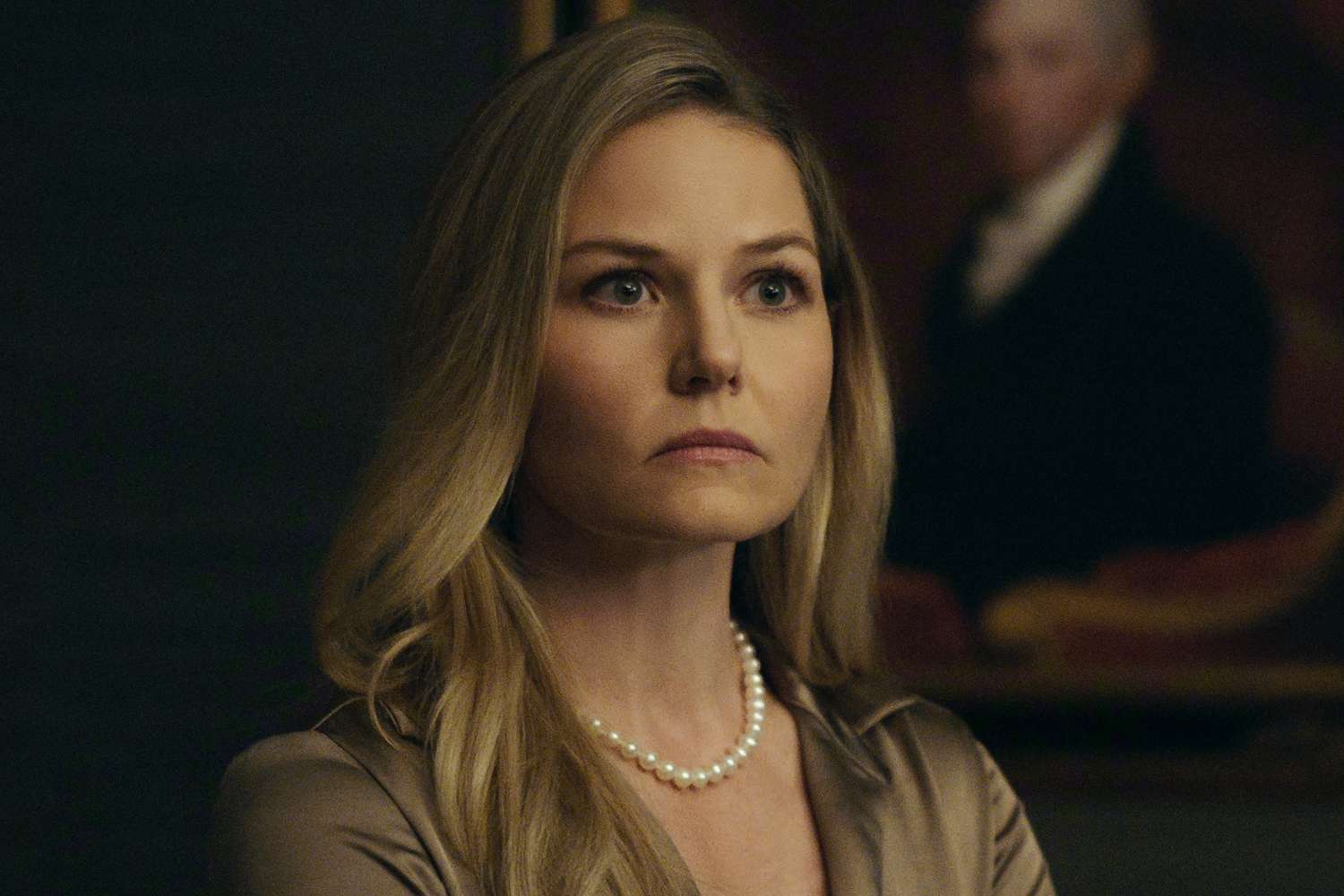
Season 3 of Netflix's gripping action-thriller The Night Agent plunges viewers back into a world of high-stakes espionage, political intrigue, and moral ambiguities. While Peter Sutherland (Gabriel Basso) and Isabel De Leon (Genesis Rodriguez) are busy dismantling the operations of intelligence broker Jacob Monroe (Louis Herthum), a new layer of complexity unfolds within the very heart of the White House. This season introduces a character whose actions send shockwaves through the narrative, brilliantly portrayed by the acclaimed actress Jennifer Morrison. As Jenny Hagan, the First Lady, Morrison delivers a performance that excavates the deeply human, albeit flawed, motivations behind her character's stunning betrayal.
Fans of Jennifer Morrison, celebrated for her iconic roles in series like Once Upon a Time and House, have eagerly anticipated her return to a prominent television role. Her casting as Jenny Hagan promised a fresh challenge, drawing her into a political landscape she hadn't explored extensively on screen. What truly captivates, however, is the profound relatability Morrison imbues into a character operating at the highest echelons of power, making her "deal with the devil" feel chillingly human.
Setting the Stage: Jenny Hagan's Deceptive Role in The Night Agent S3
In The Night Agent Season 3, the audience discovers that President Richard Hagan (Ward Horton) has a mysterious past connection to the nefarious Jacob Monroe. However, the true bombshell arrives with the revelation that it's not the President, but his wife, First Lady Jenny Hagan, who has been clandestinely collaborating with Monroe. This wasn't merely a fleeting lapse in judgment; Jenny's involvement is systematic and far-reaching. In exchange for millions of dollars to fund her husband's presidential campaign, Jenny has been providing Monroe with privileged access to the President's daily briefings. This clandestine operation forms a critical, dangerous undercurrent to the season's overarching plot, intertwining personal ambition with national security threats.
For Jennifer Morrison, joining a series she already admired presented an exciting opportunity. "I was really interested in playing a character that kind of touched the political world in some way, because it's just something I haven't had a chance to do before," Morrison shared with Entertainment Weekly, humorously adding, "And who doesn't want the first lady's clothes?" This enthusiasm for the role, combined with her professional curiosity, undoubtedly contributed to her compelling portrayal. While Morrison "had hints" during her audition that Jenny was "maybe more complicated than she appeared," the full scope of her character's entanglement only became apparent as filming progressed. Her performance as the deceitful First Lady is one of the season's most compelling elements. For a deeper dive into this fascinating character, explore Unpacking Jennifer Morrison's Deceptive First Lady Role in Night Agent S3.
The Human Element: Justification, Escalation, and Relatability
What makes Jenny Hagan's actions so compelling, and what drew Jennifer Morrison to the role, is the underlying human truth within her deception. Morrison explains that Jenny's initial entanglement with Monroe "was coming from a good place." Her conviction was that her husband, as president, would genuinely "make the world a better place." This belief, however misguided in its execution, served as her primary justification. "She thinks she's doing it for a good cause and doesn't really understand the deal with the devil that she's just made," Morrison elaborates.
This psychological dimension is crucial. Many people, even in everyday life, make choices based on what they perceive to be for the greater good, only to find themselves on a slippery slope of escalating compromises. Jenny's journey mirrors this perilous path. Once she begins to suspect Monroe's connections to terrorist groups, the gravity of her situation truly sinks in. By then, however, she is "in too deep to get out." This complexity, the transition from principled (if flawed) intention to desperate self-preservation, resonated deeply with Morrison.
As actors often seek to find the truth in their characters, Morrison appreciated that Jenny's decisions, while leading her down a dark path, were "so justified in her mind." This internal justification, combined with the subsequent scramble to escape the consequences, felt profoundly "human and relatable." It challenges the often-two-dimensional portrayal of political figures, reminding us that even those in positions of immense power are susceptible to human frailties, ambition, and the unforeseen repercussions of their choices. It forces viewers to consider: how far would you go for a cause you believed in, even if it meant compromising your ethics?
The Slippery Slope of "Good Intentions"
- Initial Justification: Jenny genuinely believes in her husband's potential to improve the world, viewing the campaign funds as a necessary means to an admirable end.
- Unforeseen Consequences: She underestimates the true nature of Monroe and the dangerous implications of her alliance.
- Escalation and Entrapment: As the true villainy unfolds, Jenny finds herself trapped, unable to extricate herself without severe personal and political repercussions.
The Point of No Return: A Tragic Catalyst for Jenny Hagan
Every great narrative features a pivotal moment where a character's fate is irrevocably sealed. For Jenny Hagan, this comes in a harrowing scene in episode 3, which Jennifer Morrison aptly describes as Jenny's "point of no return." This moment doesn't just advance the plot; it solidifies Jenny's entrapment and pushes her further into moral compromise.
The scene involves Jenny's collaboration with Henry Mott (Steven Robertson), a White House butler. Mott, desperate for money to fund his child's cancer treatments, agrees to help Jenny photograph presidential briefs. During a heated argument over these sensitive papers, an unexpected entry by Chelsea Arrington (Fola Evans-Akingbola), a Secret Service agent now on the First Lady's detail, triggers a tragic chain of events. In a split-second decision driven by fear and a desire to conceal her actions, Jenny falsely accuses Mott of having a gun. Chelsea, acting on instinct to protect the First Lady, fatally shoots Mott. Unknown to Chelsea at the time, Mott was unarmed.
This incident is a brutal illustration of how Jenny's initial "good intentions" have spiraled into outright destruction. Her instinct to survive, to protect her secret, leads directly to an innocent man's death. It's a stark, visceral moment that underscores the heavy price of her deception and eliminates any remaining moral high ground she might have perceived herself to occupy. This moment further elevates the character's complexity, making her a truly fascinating, if tragic, figure in the series.
Jennifer Morrison's Journey: From Fairytale to Political Thriller
Jennifer Morrison has built an impressive and diverse career, demonstrating a remarkable range across various genres. Born in Chicago, Illinois, and raised in Arlington Heights, Morrison's early life saw her delve into modeling before pursuing her passion for acting. She honed her craft studying Theater and English at Loyola University and the prestigious Steppenwolf Theater Company, eventually relocating to Los Angeles to kickstart her professional career.
Her film debut came early, sharing the screen with Richard Gere and Sharon Stone in Intersection (1994). She gained wider recognition through roles in films like Urban Legends: Final Cut (2000), but it was her television work that cemented her status as a household name. Audiences worldwide fell in love with her as Dr. Allison Cameron in the medical drama House, a role she inhabited for six seasons. Later, she captivated millions as Emma Swan, the 'Savior' in the fantastical series Once Upon a Time, navigating fairytale curses and complex family dynamics for seven seasons. Her transition from the magical realm of Storybrooke to the gritty reality of political espionage in The Night Agent showcases her versatility and commitment to exploring challenging characters.
Morrison’s career trajectory is a testament to an actor's evolution, constantly seeking roles that push boundaries and offer new perspectives. Her approach to Jenny Hagan, finding the relatable humanity within a character who makes deplorable choices, is a hallmark of her thoughtful acting style. For more on her varied career, check out From Once Upon a Time to Night Agent: Jennifer Morrison's Political Intrigue.
Conclusion
Jennifer Morrison's portrayal of Jenny Hagan in The Night Agent Season 3 is a masterclass in humanizing complexity. She brings depth and relatability to a character who, on the surface, commits acts of profound betrayal. By exploring Jenny's journey from misguided good intentions to desperate complicity and ultimately, tragic consequences, Morrison invites viewers to look beyond the political facade and confront the very human pressures, justifications, and unraveling that can drive even the most powerful individuals. It’s a performance that not only elevates the tension of the series but also serves as a poignant reminder that morality, even in the highest offices, is often a spectrum of grays, where good intentions can pave the path to devastating outcomes.